
Loading...
Serving Superior, WI and surrounding areas. (715) 217-3037
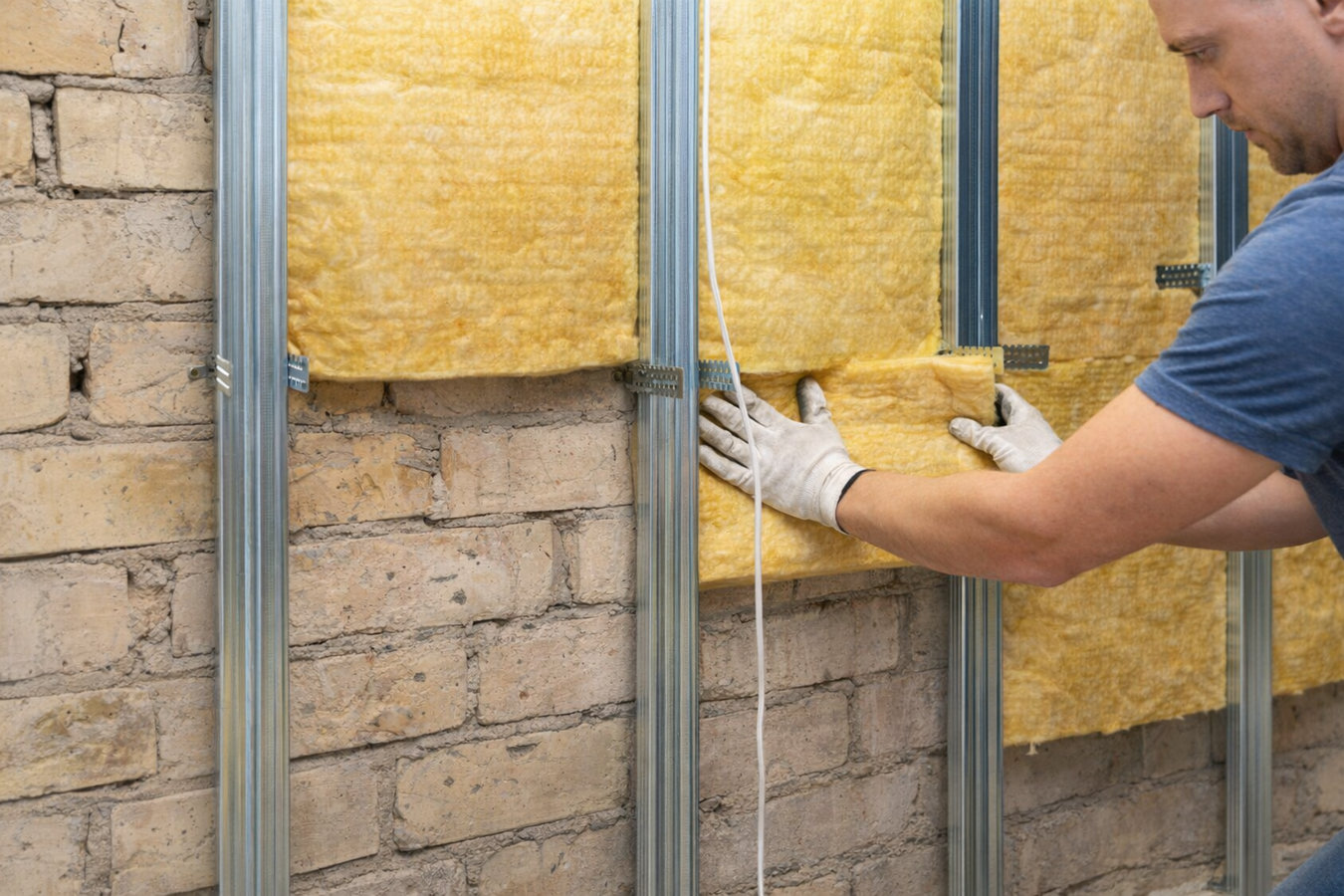
An under-insulated basement is one of the most common sources of heat loss in older Superior homes. We insulate basement walls, seal rim joists, and address moisture before any material goes in — because doing it right the first time means you won't be dealing with the same problems again in five years.
Basement insulation creates a barrier between the cold ground and your living space, so heat stays inside your home instead of escaping through the floor and walls. Without it, your furnace works harder than it needs to, and you end up paying for warmth that disappears into the earth. Most homeowners in Superior notice the difference in their heating bills within the first full winter after the work is done.
Much of Superior's residential housing was built in the early-to-mid 20th century, when basement insulation was either minimal or nonexistent by today's standards. Many homes in neighborhoods like Billings Park, East End, and the Tower Avenue corridor have basements that have never been properly insulated, or have old fiberglass batts that have sagged, gotten wet, or worn out over decades.
The most important quality indicator in any basement insulation job is air sealing — making sure every gap, crack, and penetration around pipes and wires is sealed before or alongside the insulation. Insulation without air sealing is like wearing a sweater with holes in it. Our air sealing services are included in every comprehensive basement project we complete.
If your gas or electric bill climbs sharply as soon as cold weather arrives, your basement is likely one of the biggest culprits. In Superior, where winters start early and run long, an uninsulated basement can account for a significant chunk of your total heat loss.
Walk across your kitchen or living room floor on a January morning in your socks. If the floor feels noticeably cold despite your furnace running, heat is escaping downward through an uninsulated or poorly insulated basement ceiling. This is one of the most direct signs that basement insulation is overdue.
The rim joist — the framing that sits right on top of your foundation — is one of the leakiest spots in most older homes. If you look up at the top of your basement walls where the floor framing begins, you may see gaps, cracks, or even daylight. In Superior's winters, cold air pours through those gaps constantly.
Condensation and musty odors are signs of a moisture problem, which often goes hand in hand with inadequate insulation. Superior's combination of cold winters and humid summers — amplified by proximity to Lake Superior — creates conditions where uninsulated basement walls cycle between cold and warm, causing moisture to collect.
The most common materials used in basements are rigid foam boards — stiff panels cut to fit against the walls — and spray foam, a liquid that expands and hardens in place, sealing gaps as it goes. Blown-in or batt insulation is more often used in attics and walls above grade. Your contractor will recommend the right type based on your basement's moisture history and how you use the space.
For rim joists specifically, closed-cell spray foam is often the best choice because it insulates and acts as a moisture barrier in a single step. See our closed-cell foam insulation page for more information on that application.
If you are finishing your basement — adding drywall and turning it into livable space — Wisconsin's energy code sets minimum insulation levels for your climate zone that must be met as part of that renovation. We know what those requirements are for Superior and make sure every permitted project we complete passes inspection.
Superior sits at the western tip of Lake Superior and regularly sees winter temperatures drop well below zero. The city averages around 130 days per year below freezing, and wind chills off the lake can make it feel even colder. That kind of sustained cold means an uninsulated or under-insulated basement is actively pulling heat out of your home for months at a time, and your furnace is paying the price every single month from November through March.
Living near the largest freshwater lake in the world by surface area means Superior homeowners deal with higher ambient humidity than most inland Wisconsin cities. That moisture finds its way into basements, especially in older homes with block or stone foundations. Before any insulation goes in, a contractor working in Superior needs to take moisture seriously — a quick visual check is not enough. This is one reason why choosing a contractor with genuine local experience matters: they will know what to look for in a Superior basement that someone from out of town might miss.
When you call or submit a request online, we'll ask you a few basic questions — the size of your basement, whether it's finished or unfinished, and whether you've had any water issues. This helps us show up to the estimate prepared.
We walk through your basement and look at the walls, ceiling, existing insulation, and the framing at the top of the foundation walls. We also check for signs of moisture — staining, efflorescence on the walls, or soft spots in the framing. This assessment is what separates a real quote from a number pulled out of thin air.
After the visit, we send you a written proposal that breaks down what work will be done, what materials will be used, and the total cost. If the project requires a building permit, we include pulling it as part of our scope and handle the process on your behalf.
The crew will arrive with materials and equipment and get to work sealing gaps and penetrations first, then installing the insulation. Most residential basement jobs are completed in one to two days. We clean up the work area before leaving — you should not be left with debris or loose materials on the floor.
We respond within 1 business day and provide free written estimates. No obligation to proceed after the assessment visit — just honest information about what your basement needs.
(715) 217-3037Closed-cell spray foam is one of the best options for rim joists and basement walls — it insulates and acts as a moisture barrier in one application.
Learn MoreIf your home has a crawl space instead of or alongside a basement, we assess and insulate both zones in a single project.
Learn More