
Loading...
Serving Superior, WI and surrounding areas. (715) 217-3037
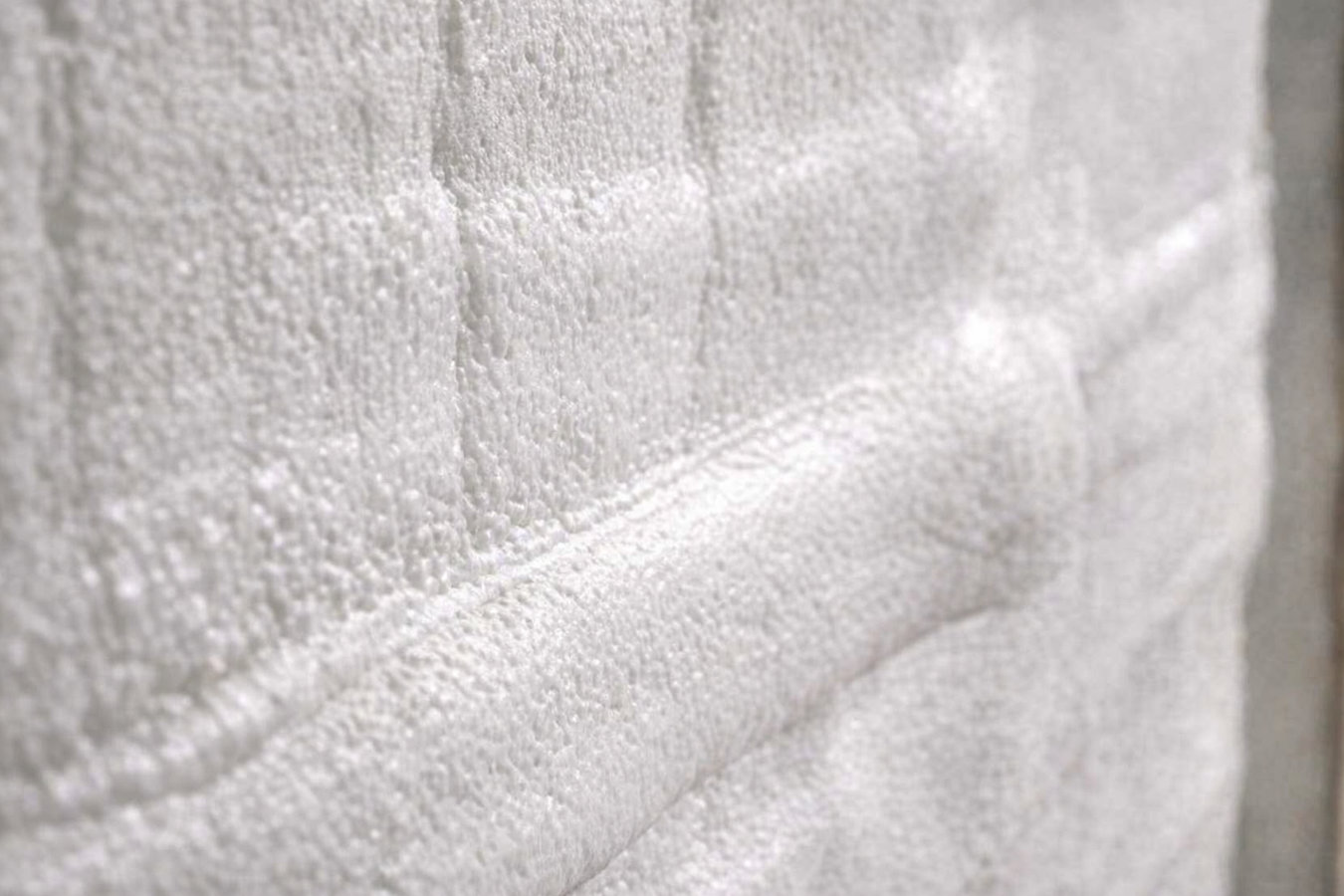
Closed-cell spray foam delivers the highest R-value per inch of any common insulation material and acts as a moisture barrier at the same time. For rim joists, basement walls, and tight spaces in older Superior homes, it's often the best tool for the job.
Spray foam insulation comes in two types: open-cell and closed-cell. closed cell spray foam is the denser of the two. It's made up of tiny, tightly-packed cells that are completely sealed — the material is rigid after it cures, resists moisture, and delivers R-6 to R-7 per inch of thickness. That's roughly twice the insulating value per inch of standard blown-in insulation.
The foam is applied as a liquid that expands to fill the space it's sprayed into, sealing gaps and penetrations at the same time it insulates. Unlike cut-and-fit rigid foam boards or fiberglass batts, spray foam conforms to irregular surfaces and expands into cavities that would otherwise be impossible to insulate effectively — which is one of the main reasons it's so useful in older Superior homes where framing is not always perfectly uniform.
Our spray foam insulation page covers both open- and closed-cell applications. This page focuses specifically on closed-cell foam and the situations where it's the right call.
When you're working in a space where there's physically limited room — a 1.5-inch rim joist cavity, a narrow eave, or a tight knee wall — you need to get as much insulating value as possible out of every inch of thickness. Closed-cell foam gives you R-6 to R-7 per inch, meaning a 3-inch application delivers performance that would require 4 to 5 inches of other products.
Closed-cell foam is rated as a vapor retarder, which means it slows the movement of moisture through the treated surface. In the rim joist zone — where outdoor cold air meets warm interior framing — moisture control is just as important as thermal resistance. Superior's humidity from Lake Superior makes this especially relevant. A closed-cell application here handles both in a single product.
Closed-cell foam is rigid after curing and bonds to the surfaces it's applied to. This gives it a structural stiffening effect — it adds racking strength to the treated cavity. In older Superior homes with aging framing, this is a useful secondary benefit that comes with the insulation job rather than requiring separate work.
Because the foam is applied as a liquid that expands and hardens in place, it fills every gap and crack in the treated area during application. There's no separate air sealing step for the areas being foamed — the material handles both functions at once. For rim joists in particular, this is a major advantage over rigid foam boards, which require careful taping of every seam.
Closed-cell foam is not the right product everywhere — it's expensive per board foot, and in most attic and wall applications, blown-in insulation delivers comparable performance at lower cost. But in certain zones, it's genuinely the best tool available.
The rim joist cavity — the framing above the foundation wall — is the most common application for closed-cell foam in a residential project. It's a zone where tight fit, moisture control, and high R-value per inch all matter, and where the irregular framing of older homes makes spray foam superior to rigid boards.
Applied to the interior face of basement walls, closed-cell foam insulates and controls moisture from the concrete. This is particularly useful in Superior's older homes with block or poured concrete foundations that have a history of slight moisture seepage.
In a crawl space encapsulation project, closed-cell foam on the crawl space walls keeps the space semi-conditioned and controls the moisture that would otherwise move through the uninsulated concrete or block.
Where there's limited space between the ceiling surface and the roof deck — a common situation in cape cods and older bungalows — closed-cell foam can deliver the required R-value in the available depth. We assess the specific dimensions and check ventilation requirements before recommending this application.
We walk through the area being foamed, measure the space, and assess moisture conditions and access. We'll tell you the R-value target, the thickness needed to hit it, and the total cost. For rim joists alone, this is usually a quick conversation. For larger projects, we'll take more time.
The crew prepares the space by cleaning out any debris, removing old insulation if needed, and masking any surfaces that shouldn't get overspray. This step matters — proper prep is what separates a clean installation from one that requires rework.
Two chemical components are mixed at the spray gun tip and applied as a liquid that expands within seconds. The crew applies the material in passes, building up to the target thickness. You and your household should not be in the treated area during application — we'll give you a specific re-entry timeframe before we start.
Once cured, any foam that has expanded beyond the target thickness is trimmed flush. The crew cleans up the work area, removes masking material, and walks you through what was done. For an attic or basement project involving multiple zones, the crew typically finishes in one full day.
We respond within 1 business day and provide free written estimates. We'll tell you which product is actually right for your situation — even if that means a less expensive option.
(715) 217-3037Open-cell foam is more vapor-permeable and less expensive than closed-cell — the right choice for interior wall cavities and applications where moisture control is less critical.
Learn MoreClosed-cell foam is the go-to material for rim joists and basement foundation walls — we combine both as part of every comprehensive basement insulation project.
Learn More