
Loading...
Serving Superior, WI and surrounding areas. (715) 217-3037
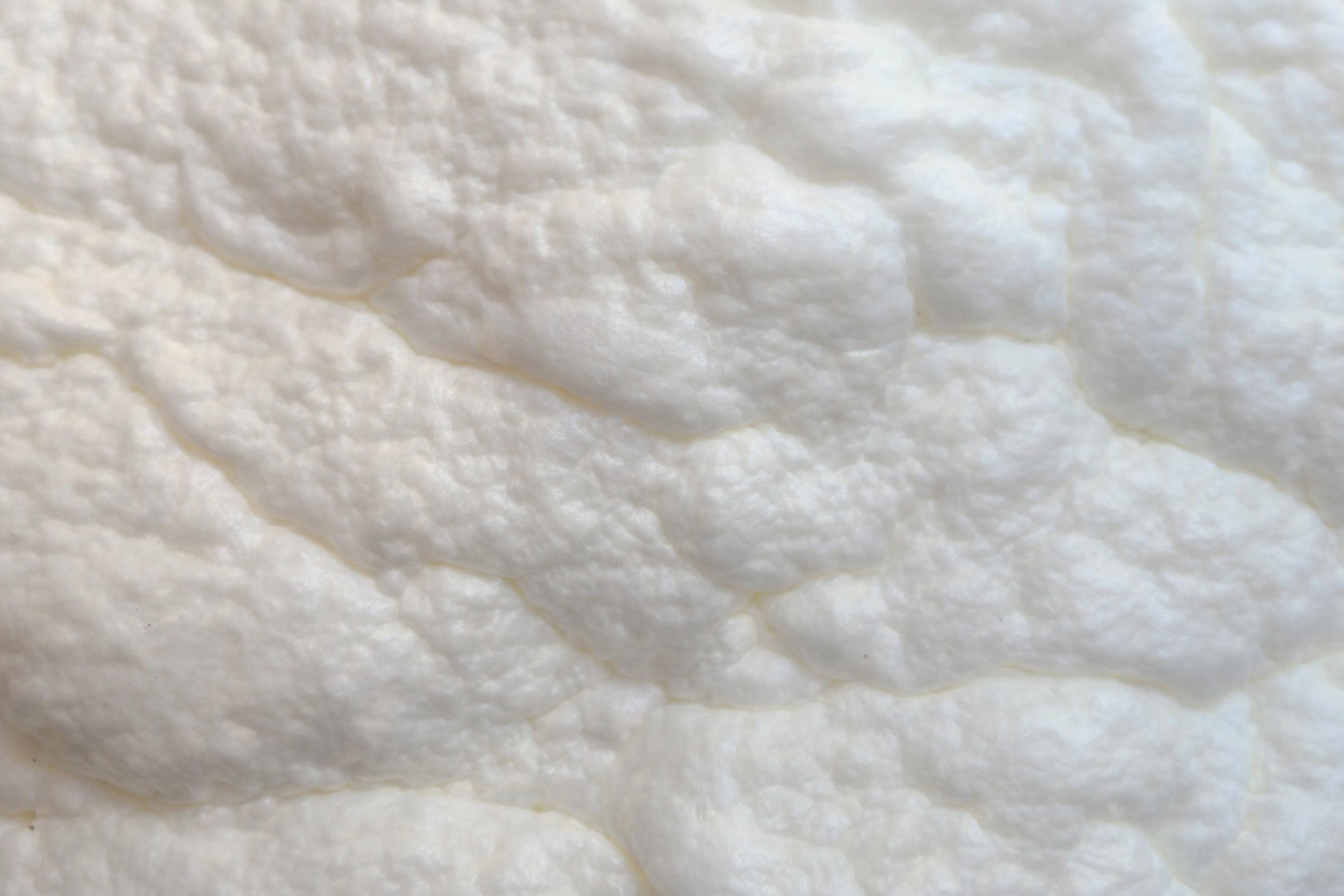
Open-cell spray foam delivers thorough air sealing and solid insulating performance at a lower cost than closed-cell foam. It's well suited for wall cavities, cathedral ceilings, and interior applications where moisture control isn't the primary concern.
Open-cell foam is the lighter, softer type of spray foam insulation. It's made up of small cells that are intentionally broken and open to the surrounding air, giving it a spongy texture. It delivers R-3.5 to R-4 per inch — solid performance, comparable to dense-pack cellulose — and because the cells are open, it allows some moisture to pass through over time, which makes it vapor-permeable.
Like all spray foam, it's applied as a two-component liquid that expands and hardens in place, filling the cavity it's sprayed into and sealing gaps automatically. The expansion is more dramatic with open-cell foam than with closed-cell — it can expand 100 times its original volume — which is part of why it's so effective at filling wall cavities and irregular spaces without leaving gaps or voids.
For a full comparison of open- and closed-cell foam, see our spray foam insulation page, which covers when each type is the right call.
Open-cell foam costs significantly less per board foot than closed-cell. For large-area applications like whole-wall insulation during a gut renovation or the underside of a large cathedral ceiling, the cost difference is meaningful. When moisture control isn't the main concern, open-cell gives you solid air sealing and R-value performance for less money.
Open-cell foam's extreme expansion ratio makes it particularly effective in wall cavities — it fills the entire cavity, including around wires, electrical boxes, and irregular framing, without leaving voids. This is difficult to achieve with blown-in insulation and impossible with fiberglass batts, both of which can leave gaps around obstructions.
The spongy cellular structure of open-cell foam absorbs sound energy effectively, reducing noise transmission between rooms and between floors. Homeowners who want quieter bedrooms, home offices, or rooms adjacent to mechanical equipment sometimes choose open-cell foam for interior walls specifically for this benefit.
In certain roof and wall assemblies, vapor permeability is a feature rather than a drawback. Open-cell foam allows moisture that enters the assembly to escape toward the interior, which supports drying in properly designed assemblies. For above-grade wall applications in Superior's climate, a contractor experienced with building science will know when this matters and how to design the assembly correctly.
Open-cell foam is not the right product for every application. In zones where moisture control is essential — rim joists, basement walls, crawl space encapsulation, or tight roof assemblies where there's minimal depth — closed-cell foam is almost always the better choice. Superior's climate amplifies this: Lake Superior's humidity and the city's dramatic seasonal temperature swings mean moisture management is a real concern in the foundation and near-grade zones of every home here.
We never push one product over another based on margin. In any assessment, we'll tell you which foam type is appropriate for each zone, when blown-in insulation is a better fit, and when the answer is a combination of products. See our closed-cell foam insulation page for details on that option.
We visit the home, measure the area to be foamed, and check that the application makes sense for the zone in question. If closed-cell would serve you better for part of the project, we'll tell you that. You receive a written estimate that specifies the thickness, R-value target, and total cost.
The crew prepares the area — cleaning surfaces, removing old insulation if necessary, and masking adjacent surfaces. Open-cell foam expands significantly, so masking is important. We'll also confirm the re-entry timing with you before we start.
The foam is applied with professional two-component spray equipment. It expands and hardens within seconds, filling the cavity from stud to stud and around all penetrations. You should not be in the treated area during this process. Your contractor will give you the specific re-entry time based on the product and ventilation conditions.
Once the foam has fully cured, any excess that expanded beyond the target depth is trimmed flush to the framing. This is standard practice with open-cell foam, which often expands beyond the stud depth. The crew cleans up and walks you through the finished work.
We respond within 1 business day and provide free written estimates. We'll walk you through exactly which product makes sense for each zone of your home — and why.
(715) 217-3037For rim joists, basement walls, and moisture-prone zones in Superior homes, closed-cell foam's higher R-value per inch and built-in vapor resistance make it the better choice.
Learn MoreOur spray foam insulation page covers both open- and closed-cell applications and explains when each type is the right call for a given project.
Learn More