Loading...
Serving Superior, WI and surrounding areas. (715) 217-3037
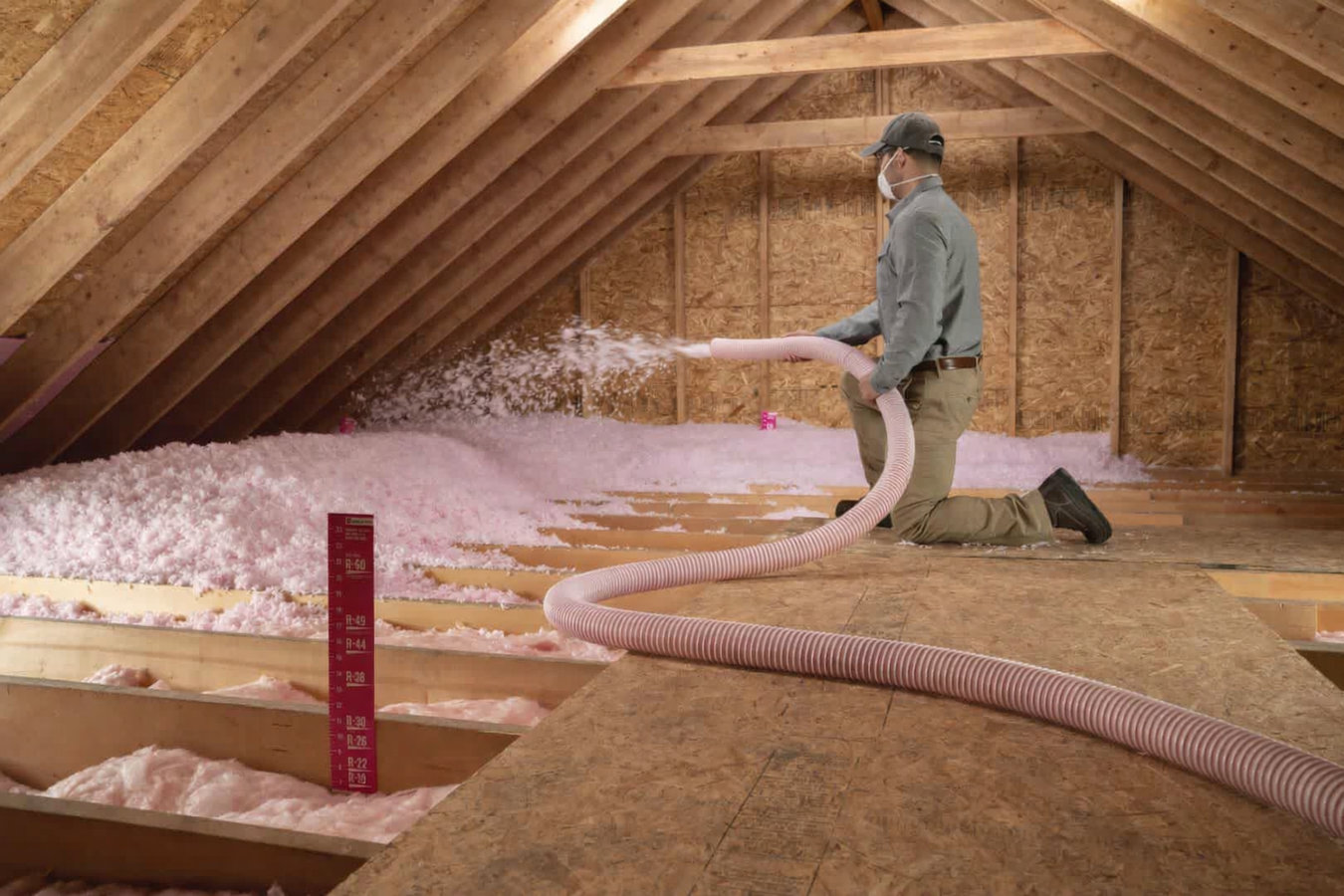
Blown-in insulation fills irregular attic joists, wall cavities, and tight spaces that batt insulation cannot reach. For older Superior homes built before modern energy codes, it is one of the most practical ways to close the gap between what is there and what Wisconsin requires.
Blown-in insulation - loose cellulose or fiberglass material pumped through a hose and distributed evenly across your attic floor - fills gaps and irregularities that rigid batts consistently miss. In a city where heating season runs from October through April and winter temperatures regularly drop below zero, even a modest insulation improvement shows up on your utility bill.
A large share of Superior's housing stock was built before the 1980s, when attic insulation standards were far below what Wisconsin's energy code requires today. Many of these homes have settled, compressed original insulation that provides almost no protection against cold. Blown-in material brings those attics up to current depth standards in a single visit, without tearing out ceilings or disrupting the living space below.
For a complete approach to your home's thermal envelope, our home insulation service covers every zone - attic, walls, crawl space, and rim joist.
If your gas or electric bill creeps up each winter without any change in your habits, your attic insulation may not be doing its job. In Superior, where heating season stretches nearly half the year, even a modest improvement can show up on your monthly statement.
Ice dams form when heat escaping through your attic melts snow unevenly. They are common in Superior's older homes and can cause water to back up under shingles and damage ceilings. Better attic insulation and air sealing is the most effective long-term fix.
Uneven temperatures room to room often point to gaps in attic coverage. Older Superior homes frequently have more insulation over some areas than others, leaving cold spots that no thermostat adjustment can fix.
Homes built before modern energy codes in Wisconsin were constructed with minimal attic insulation. If your home has never had insulation work done, there is a reasonable chance it falls well short of what the state recommends for Superior's climate zone.
We install blown-in cellulose and blown-in fiberglass depending on the application. Cellulose - made from recycled paper - is dense and settles minimally, making it a practical choice for attics in Superior's climate. Fiberglass blown-in provides a good R-value and works well in wall cavities through dense-pack injection, filling the cavity completely without requiring demolition.
For older homes with irregular framing or previous insulation that has settled, we recommend pairing blown-in work with attic air sealing. Air sealing first closes the gaps around light fixtures, plumbing chases, and top plates - gaps that allow warm air to bypass the insulation entirely. Our wall insulation service uses the same dense-pack blown-in technique to fill existing wall cavities from the outside, which avoids the need to remove interior drywall.
Wisconsin's energy code sets higher insulation requirements for Superior's climate zone than most of the country. Older homes - which make up the majority of housing in neighborhoods like Billings Park, the East End, and the South End - fall well short of those requirements. Blown-in insulation is the most practical way to add the required depth in an existing attic without major construction, and it fills the irregular spaces common in homes built during the early 1900s.
The proximity to Lake Superior adds a moisture dimension that inland Wisconsin communities do not face. A contractor who works regularly in Superior understands how to assess ventilation and vapor management before adding blown-in material - because trapping moisture in an attic is worse than having too little insulation. We serve homeowners throughout Superior and neighboring communities, and we know the code requirements for each municipality before we start any job. See our service page for Wisconsin's Uniform Dwelling Code for the official energy requirements that govern this work.
We respond within 1 business day. You will be asked a few quick questions about your home's age and what you have been experiencing - high bills, drafts, or ice dams. This helps us arrive prepared.
We go into your attic, measure the current insulation depth, check for air leaks around fixtures and pipes, and assess ventilation. You get a written estimate that specifies material type, depth target, and total cost - no surprises.
We confirm whether a permit is required through the City of Superior and handle it if so. Most blown-in attic jobs do not require a permit, but we verify before scheduling to keep the project on track.
Our crew completes most blown-in attic jobs in four to eight hours. You can stay home throughout. There is no curing window - your home is ready to enjoy the same day, and you should notice a difference in comfort from the first cold night.
We respond within 1 business day and provide free written estimates. No obligation to proceed after the assessment visit - just honest information about what your home needs.
(715) 217-3037Our crews know Wisconsin homes and the local energy code. Every job is documented with a written scope and photos so you have a clear record of the work.
Most contractors skip the air sealing step because it takes time. We include it when the attic needs it - because insulation without air sealing underperforms in homes with gaps at the ceiling plane.
We have worked on homes in Billings Park, the East End, and throughout Douglas County since 2018. We know what Superior's climate does to older housing stock.
Every project starts with a free on-site walkthrough and a written quote. You have all the information you need to decide on your timeline - we do not follow up repeatedly or pressure you to commit.
A full-home insulation assessment covers every zone - attic, walls, crawl space, and rim joist - and gives you a clear plan for where to start.
Learn MoreBlown-in wall insulation fills existing wall cavities in older Superior homes without tearing out drywall, stopping drafts at the source.
Learn MoreSuperior winters are long - the sooner your attic is up to depth, the sooner you stop paying to heat air that escapes through the ceiling.